
Home · 3 min read
How to choose a throw blanket for everyday use
By ToGiva Editorial · Published
Compare size, fabric information and care requirements before choosing a throw for a sofa, desk chair or bedroom.
ToGiva sells products linked in this guide. Product photographs are used with supplier permission. This is general editorial guidance, not independent product testing or expert review.
A throw blanket should fit how you use a room, not only how it looks in a photograph. The right decision may be a compact layer for a chair, a wider cover for a sofa or something easy to store between uses. Compare dimensions, fabric information and care requirements before choosing a color.
Begin with the place and purpose
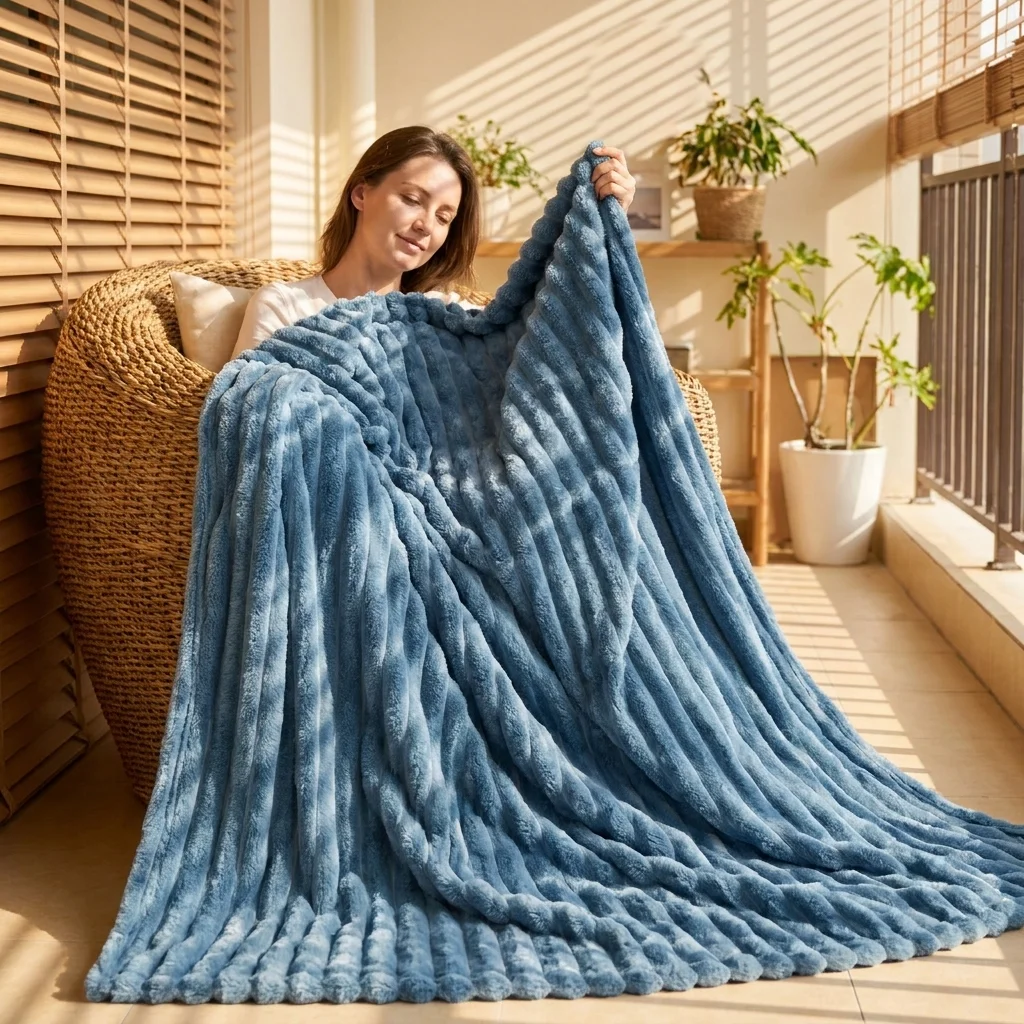
Measure the seat or area where you expect to use the throw. Decide whether you want it across your lap, over your shoulders or folded on the back of a sofa. A listing image may show a large bed even when the selected variant is small, so rely on the exact option's measurements rather than the scene in the photo.
If several people will use it, consider storage and cleaning as well as appearance. A bulky throw may be appealing but awkward in a narrow cupboard. A lightweight option may be easier to move around, but warmth and feel cannot be guaranteed from weight or a product name alone.
Read fabric information carefully
Terms such as plush, velvet or flannel describe aspects of texture or construction and do not always identify fiber content. Check the stated composition. Do not assume that a soft-looking product is natural fiber, hypoallergenic or suitable for a particular skin condition without reliable information.
ToGiva's bedding and blankets collection includes different blanket formats. A textured ribbed plush throw is an example to compare by its selected dimensions and stated material, not a product we have independently tested for softness or warmth.
Make care part of the purchase decision
Check the actual care label or manufacturer directions. Do not assume every blanket can be machine-washed because another blanket with a similar fabric name can. Consider whether you have suitable washing capacity and drying space, and whether the care requirements fit your routine.
If the listing does not answer an important care question, ask before buying. Avoid treating a decorative label or a photograph as proof of washability. Care information matters most when you plan to use the throw frequently rather than keep it solely as a display item.
Choose a color for everyday surroundings
Look at the sofa, chair and nearby surfaces in daylight. A neutral can be flexible, while a contrasting color can define a small seating area. Screen colors differ, so do not expect a photograph to guarantee an exact match to your furniture. A texture you enjoy can be more useful than coordinating every item precisely.
Keep heated products a separate choice
An electrically heated blanket is not interchangeable with an ordinary throw. If you are considering one, check its exact power requirements, instructions, restrictions and care method. Do not apply washing or folding advice from an unpowered blanket to an electrical product. This guide is about ordinary everyday throws, not electrical-product safety certification.
Before you choose
- Confirm the selected variant's dimensions and quantity.
- Look for stated fiber content rather than inferring it from a texture name.
- Check care requirements and where it will dry or be stored.
- Treat warmth, feel and color as preferences, not guaranteed performance.
- Review current price, availability and return terms.
Textile-labeling guidance from the Federal Trade Commission explains why fiber information matters: https://www.ftc.gov/business-guidance/resources/threading-your-way-through-labeling-requirements-under-textile-wool-acts. Product-specific instructions remain the practical authority for care; this guide does not independently verify a manufacturer's textile claims.